Charged for fuel after you filled the rental car up?
The short answer
Keep the fuel receipt and a photo of the gauge. If you returned the car full and were still charged, those two things are usually what gets the charge removed. Rental companies charge their own fuel rate, often well above the pump price, when they think the tank wasn't full.
Free call. We answer 24/7, every day of the year.
Or leave your number and we'll call you back.
Key takeaways
- Keep the fuel receipt and a photo of the gauge when you return a rental car.
- Rental companies charge their own fuel rate when they think the tank wasn't full, often well above the pump price.
If this is you right now
You stopped at a station two minutes from the airport, filled right up, and dropped the car off. Then the final bill shows a refueling charge, at a price per gallon you'd never pay at a pump.
How do rental companies charge for fuel?
- Enterprise: if you don't refuel to the same level you started with, you pay Enterprise's local rate, which it says is typically above the local pump price.
- Avis: its EZFuel service charges a flat fee when you drive fewer than 75 miles and return without refueling. If you fill up and show the fuel receipt, Avis says the EZFuel charge is removed.
- Hertz: if the car comes back with less than a full tank, a local refueling charge is added.
- Prepaid fuel options let you return at any level, but you pay for a full tank whether you use it or not.
Why was I charged even though I filled up?
- The gauge needle can drop slightly after a short drive, and some check-ins read it as less than full.
- The car was checked in by a scanner or by nobody, and the fuel level was recorded wrongly.
- A fuel option was added at the counter that you didn't realise you'd accepted.
- On short rentals, a flat fuel fee applies unless you show a receipt.
How do I get a rental car fuel charge removed?
Send the rental company your fuel receipt, showing the time and a station near the return location, plus a photo of the dashboard at drop-off if you have one, and ask for the charge to be reversed. Check your agreement too, in case a fuel option was added at the counter.
No receipt, or a fuel option you didn't ask for? Leave your number and we'll check it for your booking.
What are your fuel choices when you pick up the car?
At the counter you'll usually be offered a version of three choices. They sound similar when someone runs through them quickly, but they lead to very different bills.
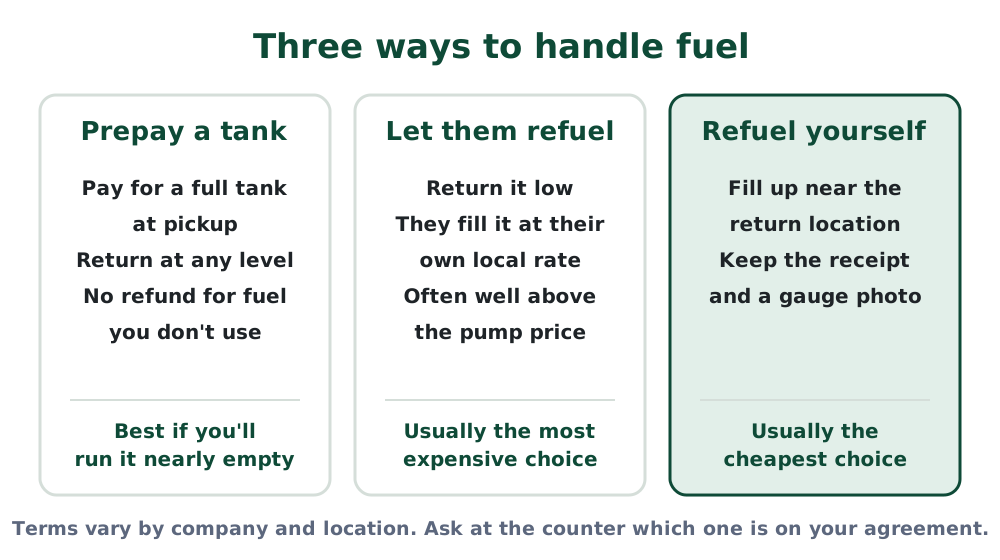
Prepaying a tank means paying for a full tank at the start and bringing the car back at whatever level you like. It's convenient if you have an early flight and won't have time to stop, and it can make sense if you'll genuinely run the tank close to empty. But if you return it half full, the fuel you leave behind is simply a gift to the rental company.
Letting the company refuel means returning the car low and paying the company's own rate for the fuel it puts in. Enterprise says its local rate is typically above the pump price, and that's the usual pattern. It's the most expensive way to buy fuel, and it's worth avoiding unless something goes wrong on the way back.
Refueling yourself means filling up shortly before you return the car. It's almost always the cheapest option. The only thing it asks of you is to keep proof, which is what the rest of this page is about.
How do you prove you returned the car full?
Fuel disputes are among the easiest charges to win, provided you have two simple things: a receipt from a station near the return location, and a photo of the gauge. Together they show where you filled up, when, and what the needle read when you handed the car back.
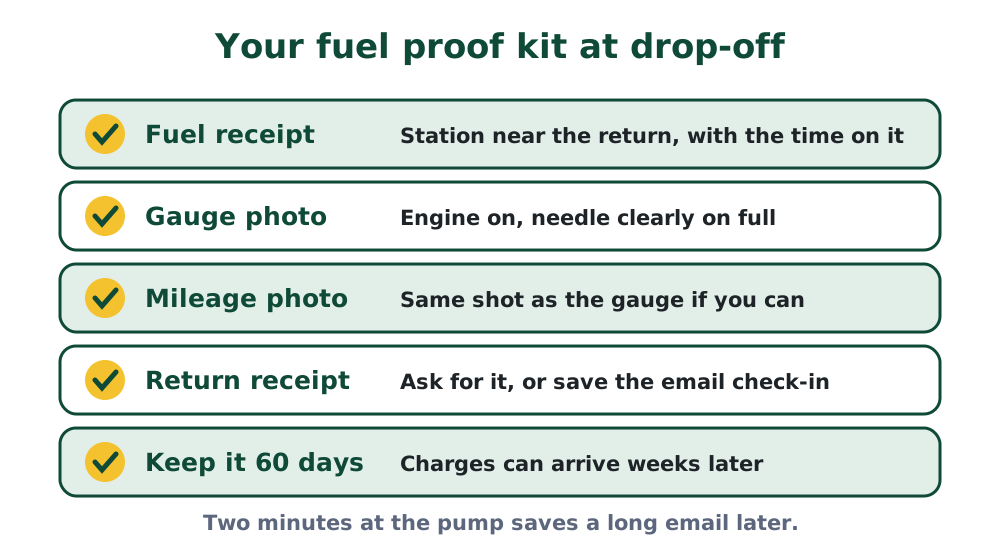
- Fill up close to the return. Within a few miles is ideal. A receipt from forty miles away invites the question of whether the needle had dropped by the time you arrived.
- Fill until the pump clicks off. Topping up past the click isn't needed, but stopping halfway is how cars come back at seven-eighths.
- Photograph the dashboard with the engine on, so the fuel gauge and mileage are both lit and readable.
- Keep the receipt and the photo together for at least sixty days. Fuel charges usually appear at check-in, but some arrive a little later.
Why might the gauge read less than full?
Fuel gauges are not precision instruments. On many cars the needle sits firmly on full for the first stretch after filling, then drops a little faster than you'd expect. On others, it takes a few minutes of driving for the reading to settle. A short drive from the station to the return lane is usually fine, but a long one, a steep climb, or a car parked on a slope can all make the needle sit a touch lower at check-in.
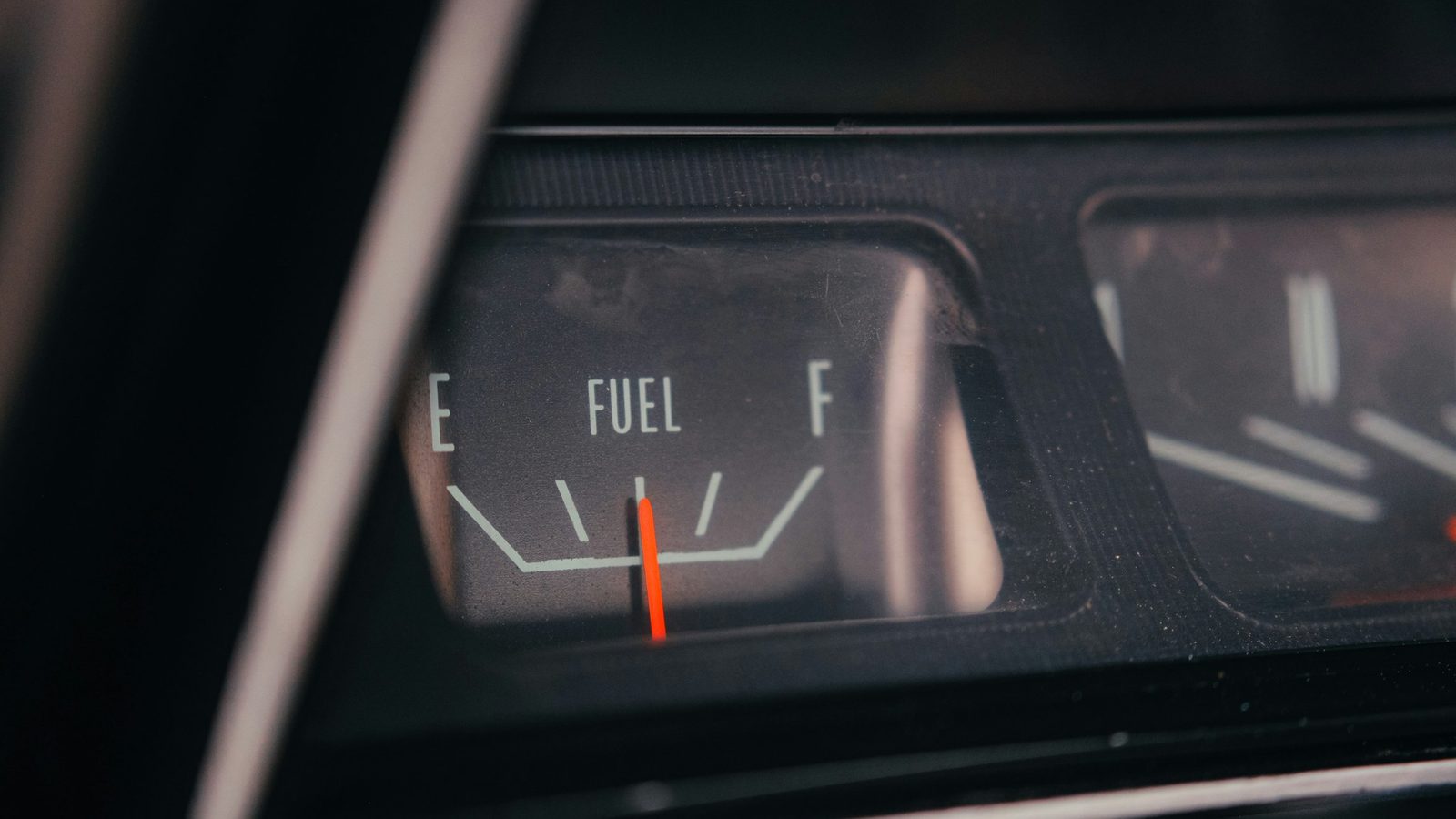
It also helps to know that you're usually asked to return the car at the same level you received it, not necessarily full. If the car left the lot at three-quarters, three-quarters is fine. Check the fuel level printed on your agreement or shown on the dashboard at pickup, and photograph it before you drive off. That one picture can settle a disagreement in a sentence.
What about short trips where you barely used any fuel?
This is where a lot of fuel charges come from. You rent a car for a quick errand, drive twenty miles, and bring it back with the needle barely moved. It feels silly to stop for two gallons, so you don't, and then a flat fuel fee appears on the bill.
Avis is a good example of how this works: its EZFuel service charges a flat fee when you drive fewer than 75 miles and return the car without refueling, and Avis says the charge is removed if you fill up and show a receipt. Other companies handle short trips in their own way. The safe habit is the same everywhere: if the needle has moved at all, stop for a small top-up and keep the receipt. Two gallons at the pump is far cheaper than a flat fee.
Is a prepaid tank ever the smart choice?
Sometimes, yes. Prepaid fuel can make sense when:
- you have a very early flight and the stations near the airport will be closed or out of the way;
- you're driving long distances and will genuinely bring the car back close to empty;
- you're returning in an unfamiliar city at night and would rather not hunt for a station.
It's poor value when you're not sure how much you'll drive, when the rental is short, or when there's a station on your way to the return. Ask at the counter how the prepaid price compares with local pump prices, and remember that there's usually no refund for fuel you don't use.
What about electric rental cars?
Electric cars swap the fuel tank for a battery, but the logic is similar. Most companies ask you to return the car with a certain level of charge, often the same as at pickup or above a set percentage, and charge a recharging fee if it comes back lower. Some charge a flat fee; others charge by how much battery was used.
- Ask at pickup what charge level is expected at return and what happens if it's lower.
- Plan your last charge before the trip back, because fast chargers near airports can be busy.
- Photograph the battery percentage at pickup and at return, just as you would a fuel gauge.
If you've never driven electric, a short practice run on the lot and a look at the charging map before you leave will make the whole rental calmer.
Where should you fill up near an airport?
Stations right at the airport entrance know exactly who their customers are, and their prices often show it. Driving a mile or two further out usually finds a cheaper pump, while still keeping you close enough that the needle stays on full. A quick look at a maps app the night before, searching for stations along your route to the return, takes the guesswork out of the last morning.
- Look one exit earlier. The last exit before the airport is often busier and pricier than the one before it.
- Check opening hours if you're returning very early or late. Not every station is open around the clock, and a closed pump is how people end up paying the rental company's rate.
- Pay at the pump with a card so the receipt shows the station's address and time, which is exactly the evidence you want.
- Know the fuel type. Most rentals take regular unleaded. Check the label inside the fuel door before you fill, especially in a pickup truck or a van that may run on diesel.
What if you put the wrong fuel in a rental car?
It happens more often than people admit, usually diesel in a gasoline car or the other way round. If you realize at the pump, don't start the engine. Call the rental company's roadside assistance number from your agreement straight away and tell them exactly what happened. Starting the engine can turn a draining job into an engine repair, and the bill for that tends to land with the renter. Being upfront early is almost always cheaper than hoping it will be fine.
Should you fill up even if the gauge still reads full?
If you've driven more than a few miles since pickup, yes. A needle can sit on full while the tank is already a gallon or two down, and the check-in may be done with a more sensitive reading than your eye. A small top-up costs a few dollars and gives you a receipt with a time and place on it, which is worth more than the fuel itself if a charge ever appears. Think of it as buying the receipt, with a little fuel thrown in.
How do you write to the rental company about a fuel charge?
Keep it short, factual and in writing. A message along these lines works well:
A message you can adapt
Hello, I returned the car on rental agreement [number] on [date] at [time] with a full tank. I've attached my fuel receipt from [station], a few miles from the return location, timed at [time], and a photo of the dashboard at drop-off. Please remove the refueling charge of [amount] from my bill. Thank you, [your name]
Attach the receipt and the photo, and keep the reply in the same email thread. If the charge has already reached your card and the company doesn't respond, note the statement date. Card disputes have time limits, usually around sixty days in the US. If you'd rather not go it alone, leave your number and an agent will help you put the evidence together.
Questions people ask
Why did the rental company charge me for fuel when I filled the tank?
Usually because the check-in recorded the tank as less than full, or a fuel option was on the agreement. A fuel receipt from near the return location and a photo of the gauge are your best evidence.
Does Avis remove the fuel charge if I show a receipt?
Avis says that if you fill up and present a receipt for your fuel purchase, the EZFuel charge is removed when you return the car.
How much do rental companies charge to refuel?
It varies by company and location. Enterprise says its local rate is typically above the local pump price. Ask at the counter before you leave.
Related help
- Charged after you returned the car
- Rental car toll fees, company by company
- Damage claim after you returned the car
OneCall Rental is an independent service and is not affiliated with any rental company or travel site.
What happens when you call
Leave your name and number
That's all we need to start.
A real person calls you back
During our hours, 24/7, every day of the year. They stay with you until it's sorted.
We find you a way forward
And explain it in plain words.
You see everything in writing before you pay a cent
Nothing is charged until you say yes.
Pickup, drop-off, and everything in between. You've always got someone.
Charged after you returned the car?
Your agent helps you understand the charge, gather your evidence and challenge it the right way. You stay in control.
Free call. We answer 24/7, every day of the year.